
We Buy Houses Fast in Dallas-Fort Worth

Learn how to sell your Texas home as-is without repairs. Explore your options, understand the process, and get a fair offer fast.

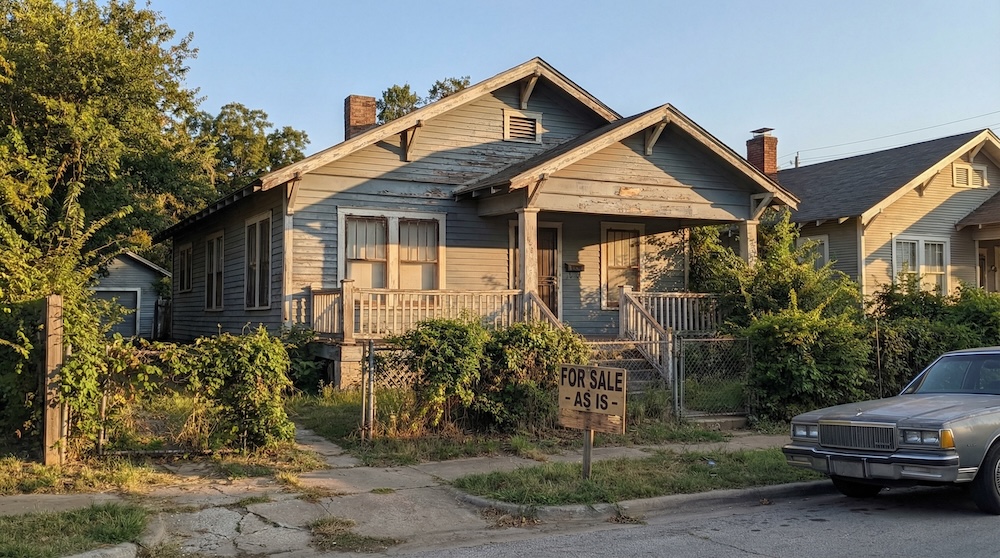
You have a house that needs work. Maybe it needs a lot of work. You don't want to spend money on repairs. You don't want to wait months for a traditional sale. You want to sell it as-is and move on.
The question is: can you actually do that in Texas? And if so, how?
The answer is yes. You can sell a house as-is in Texas. But there are rules, requirements, and strategies that determine whether you get a fair offer and close quickly.
This guide walks you through the entire process, from understanding what "as-is" means to exploring your best options for getting the home sold.
"As-is" means you're selling the home in its current condition, without making repairs or improvements.
But here's what many sellers don't understand: "as-is" doesn't mean you can hide problems or lie about the condition. Texas law requires sellers to disclose known defects, even in as-is sales.
In Texas, the seller disclosure notice is required for most residential sales. This document lists known defects, problems, and issues with the property. You must provide this to buyers before they make an offer or within a specific timeframe after they make an offer.
The disclosure covers things like:Structural issues. Foundation cracks, settling, or damage.
Water damage or leaks. Roof leaks, water intrusion, flooding history.Electrical or plumbing problems. Outdated wiring, non-functioning systems.
HVAC issues. Non-functioning heating or cooling systems.
Pest damage. Termite damage, rodent issues.Mold or moisture problems. Visible mold, moisture in crawl spaces.
Code violations. Unpermitted additions, work done without permits.
Previous damage. Fire damage, water damage, storm damage.
You can't sell a home as-is and pretend these problems don't exist. Texas law doesn't allow it. If you fail to disclose known defects, you can be sued by the buyer after closing.
That said, selling as-is means you're not fixing these problems. You're disclosing them and letting the buyer decide whether to proceed.
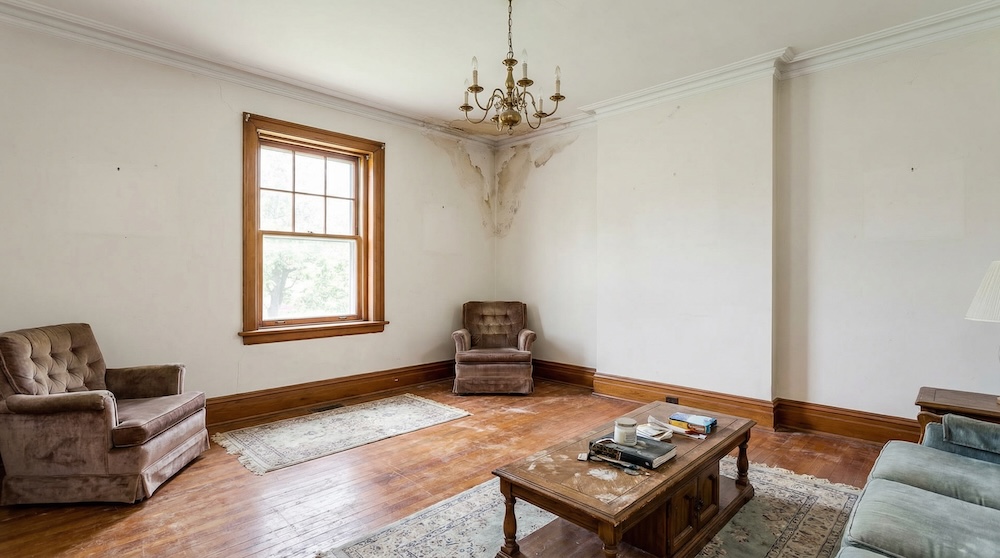
Why would a seller choose to sell as-is instead of making repairs?
Several reasons:
Cost. Repairs are expensive. A new roof can cost $10,000-$20,000. Foundation work can cost $15,000-$50,000. Kitchen updates can cost $20,000-$50,000. If you're facing multiple repairs, the costs add up quickly.
Time. Repairs take time. You might need to hire contractors, get permits, manage the work, and deal with delays. If you need to sell quickly, repairs slow you down.
Uncertainty. You might not know the full extent of problems until work starts. A contractor might find additional issues once they start working. As-is sales eliminate this uncertainty.
Motivation. You might be going through a divorce, relocating for a job, facing foreclosure, or dealing with an inherited property. You need to sell quickly, not spend months on repairs.
Condition. Your home might be in such poor condition that repairs don't make financial sense. A hoarder house, a fire-damaged home, or a severely neglected property might be better sold as-is.
For any of these reasons, selling as-is is a legitimate strategy. The key is understanding your options and choosing the path that makes the most sense for your situation.
In Texas, you must provide a seller disclosure notice to buyers. This is required by Texas Property Code Section 5.006.
The disclosure must be provided:
Before the buyer makes an offer, or
Within three days after the buyer makes an offer (if the buyer hasn't already received it)
The buyer has seven days to review the disclosure and can terminate the contract if they're not satisfied with the condition.
This is called the option period in Texas. During this time, the buyer can have inspections done and can back out of the contract for any reason without penalty.
Even if you're selling as-is, the buyer still has the right to inspect and the right to terminate during the option period. You can't waive this right.
What you can do is negotiate the option period. Some sellers try to shorten it to 3 days instead of 7. Some try to eliminate it entirely. But in Texas, the buyer has the right to an option period unless they explicitly waive it.
If you're selling as-is, expect buyers to use the option period to get inspections. They'll want to know exactly what they're buying.
If you want to sell your Texas home as-is, you have several options.
Option 1: List with a real estate agent and disclose the condition. The agent will market your home as-is, and you'll attract buyers who are willing to purchase in the current condition. You'll likely get a lower offer than if the home were in perfect condition, but you won't have to make repairs.
Option 2: Sell to a cash buyer. Cash buyers specialize in purchasing homes as-is. They don't require repairs, don't require inspections, and don't require appraisals. They buy the home in its current condition and close quickly.
Option 3: Sell to an investor or house flipper. Investors buy homes as-is, renovate them, and resell them. They understand the condition and price accordingly.
Option 4: Sell to a wholesaler. Wholesalers contract homes and assign the contract to investors. They work with as-is homes exclusively.
Each option has different timelines, offer amounts, and processes. The best option depends on your situation.
If you're selling as-is, you need to understand the difference between traditional buyers and cash buyers.
Traditional buyers are homeowners who need financing. They get a mortgage, which requires an appraisal. The appraisal is based on the home's condition. If your home is in poor condition, the appraisal will be lower, which means the buyer can borrow less, which means they can offer less.
Traditional buyers also have inspection contingencies. They can inspect the home, find problems, and either demand repairs or back out of the contract.
For as-is homes, traditional buyers are often problematic. They'll inspect, find problems, and either demand you fix them (which defeats the purpose of selling as-is) or back out.
Cash buyers are different. They don't need financing, so there's no appraisal. They don't have inspection contingencies. They buy the home as-is, in its current condition, and close quickly.
For as-is homes, cash buyers are often the better option. You get certainty, speed, and no contingencies.
The trade-off is that cash buyers typically offer less than traditional buyers. But you get certainty and speed, which for many sellers is worth the lower offer.
In Texas, buyers have the right to an option period, typically 7 days. During this time, they can have inspections done and can terminate the contract for any reason.
Even if you're selling as-is, the buyer can still inspect. You can't prevent inspections in Texas.
What you can do is negotiate the option period. You can ask for a shorter period (3 days instead of 7). You can ask the buyer to waive the option period. But the buyer has the right to an option period unless they explicitly waive it.
If you're selling as-is, expect buyers to use the option period. They'll want to know exactly what they're buying. They'll get a home inspection, possibly a termite inspection, and possibly other inspections depending on the condition.
The inspection report will likely identify problems. The buyer might then ask you to fix them or reduce the price. You can refuse, but the buyer can then terminate the contract.
This is why cash buyers are attractive for as-is homes. They don't use the option period. They don't inspect. They buy the home as-is and close.
How do you price a home when selling as-is?
The answer is: lower than a home in good condition.
Buyers will factor in the cost of repairs. If your home needs a $20,000 roof, buyers will reduce their offer by $20,000 or more. If your home needs $50,000 in repairs, buyers will reduce their offer accordingly.
The key is getting a realistic assessment of what repairs are needed and what they'll cost. You can hire a home inspector to identify problems. You can get contractor estimates for repairs. Then you can calculate what your home is worth in its current condition.
A comparable market analysis (CMA) should show you what similar homes in good condition are selling for. Then you subtract the cost of repairs to get your as-is price.
For example, if similar homes are selling for $300,000 and your home needs $40,000 in repairs, your as-is price might be $260,000.
This is where cash buyers are valuable. They'll give you an offer based on the current condition. You don't have to guess. You get a concrete number.
If you're selling as-is, how do you get the best offer?
First, be honest about the condition. Disclose all known defects. Don't hide problems. Buyers will find them during inspection anyway, and hiding them can lead to legal problems.
Second, get multiple offers. If you're listing with an agent, you might get multiple offers from different buyers. If you're exploring cash buyers, get offers from multiple cash buyers. Compare the offers and choose the best one.
Third, understand what buyers value. Some buyers care about location. Some care about the land. Some care about the bones of the house. Understand what your home's strengths are and emphasize them.
Fourth, be realistic about price. If you're asking too much for an as-is home, you won't get offers. Price it fairly based on comparable sales and the cost of repairs.Fifth, be flexible on terms. If a buyer is offering a good price but wants a longer closing period, consider it. If they want a shorter option period, consider it. Flexibility can help you get a better offer.
If you want to sell your Texas home as-is quickly, a cash buyer is often the best option.
Dallas Homes for Cash is a cash buyer in Dallas, TX that specializes in purchasing homes as-is all across Texas. They don't require repairs. They don't require inspections. They don't require appraisals. They buy the home in its current condition and close in days.
The process is straightforward:
You contact a cash buyer and provide information about your home.
The cash buyer makes an offer based on the current condition.
You review the offer and decide whether to accept.
If you accept, you sign a contract.
The cash buyer closes the sale, typically within 7-14 days.
You get your money and move on.
No repairs. No waiting. No contingencies. Just a straightforward transaction.
The trade-off is that cash buyers typically offer less than traditional buyers. But you get certainty, speed, and no contingencies.
For homes in poor condition, homes that need significant repairs, or homes where the seller needs to sell quickly, cash buyers are often the best option.
If you’re ready to sell your DFW home without the headaches of repairs, showings, or fees, Dallas Homes for Cash is here to help.
Get a no-obligation cash offer today and see what your options are before committing to a long listing process.
Call us now at (469) 305-0988 or fill out our quick form — we can evaluate your home today and have your offer ready within 24 hours.

Dallas Homes for Cash helps homeowners in Dallas and nearby areas sell their homes fast for cash. Whether you’re facing foreclosure, relocation, divorce, or just need to sell quickly — we buy houses in any condition. Serving Dallas, Fort Worth, Frisco, Plano, Garland, Mesquite, Grand Prairie, and more.


